

AI is everywhere. Work has become even more focused on speed and efficiency. Technology has outpaced how humans traditionally learn. Teams and budgets for development are shrinking. But the big ask for “more” still remains. More results. More productivity. More ROI. Now.
The rise of AI tools has led us to demand more from the same people. But they’re struggling to keep up. All the focus has been on implementing the tools, with much less emphasis on enabling the humans.
It’s a paradox and a reality for HR, learning, and tech leaders right now. The company needs to show ROI on their AI investment, but the missing ROI isn’t a technology problem, it’s a human readiness gap.
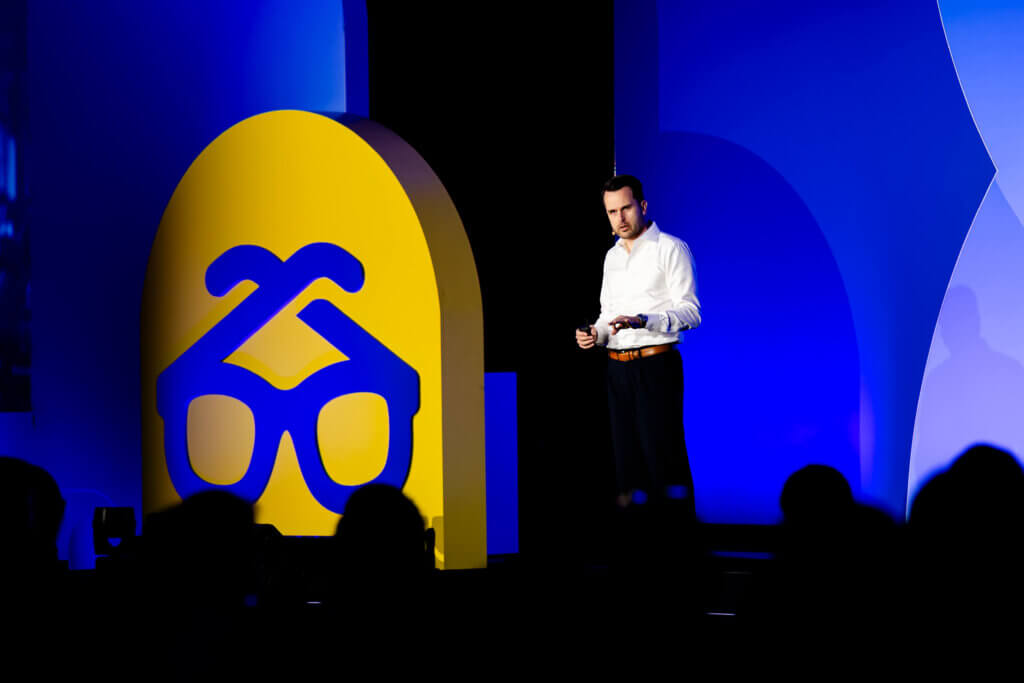
Last week, Degreed CEO David Blake took the stage at LENS 2026 to put a name to this new era of highly demanding work: The Age of Intensification.
In this new age, work, learning, and talent development has to change. At LENS, industry experts and Degreed clients and leaders touched on these changes and how to adapt. Here were some of the highlights:
Humans can still win in the Age of Intensification
The world is compressing and the rate of change is accelerating. Yet, AI hasn’t reduced human workload. It’s expanded what’s possible and raised the base level (and the bar) for performance.
Now, the ask is for people to do more in the same amount of time. Humans have to learn to use AI, and use it well. All without an over-reliance on the technology. It’s demanding. Intense.
Yet, having access to AI tools doesn’t inherently make them useful. It’s only when those tools are elevated by people and embedded into processes that the real ROI will emerge. And after the massive investment businesses made on AI, leadership teams expect that measurable return.
“Your CEOs need to see a return on it, and that pressure and that mandate is coming to you,” Blake said.
Transformation isn’t optional. The only question is whether it’s intentional and effective. And technology alone can’t drive that kind of transformation. We know because the technology is here, but the return isn’t. Only 25% of AI initiatives deliver expected ROI, according to IBM.
In this Age of Intensification, there’s also a persistent fear that AI will displace human work. But the message from LENS was more nuanced. Not only can AI not replace human work, but it was never designed to. According to the world’s first Chief AI Officer, Sol Rashidi, it was meant “to facilitate, to accelerate, to amplify the magic that we bring to the workforce.”
Although it’s easy to fawn over the capabilities AI has to offer, it’s missing critical logic, novelty, leadership, and judgment. Anyone can access AI tools, but your company is the only one with your unique workforce characteristics and skill sets. That’s what defines your business.
Or, as Rashidi reminded LENS attendees: “Technology is amazing. We’re more amazing. Don’t lose that.”

Learning must become as dynamic as change
When change is continuous, development can’t be episodic. Static learning content isn’t going to cut it when the entire world is becoming responsive and personalized.
During his session on Degreed AI Labs, Taylor Blake described what an AI-native development model could look like: “I’m going to propose that the AI Native Model is going to look something like this. Learning experiences are going to be more specialized to the task. They’re going to be more personalized to the individual. They will be more situational to the moment.”
This principle also applies more directly to the process of creating and distributing learning content. As pointed out in Financial Times, traditional learning programs can take three to six months to roll out, and AI can change entirely in that time. That’s why, although learning teams are masters at traditional content authoring and curation, this new age is calling for something more dynamic: a product mindset that plans for a fast launch and regular adjustments.
Learning can no longer be a one-time program rolled out annually.
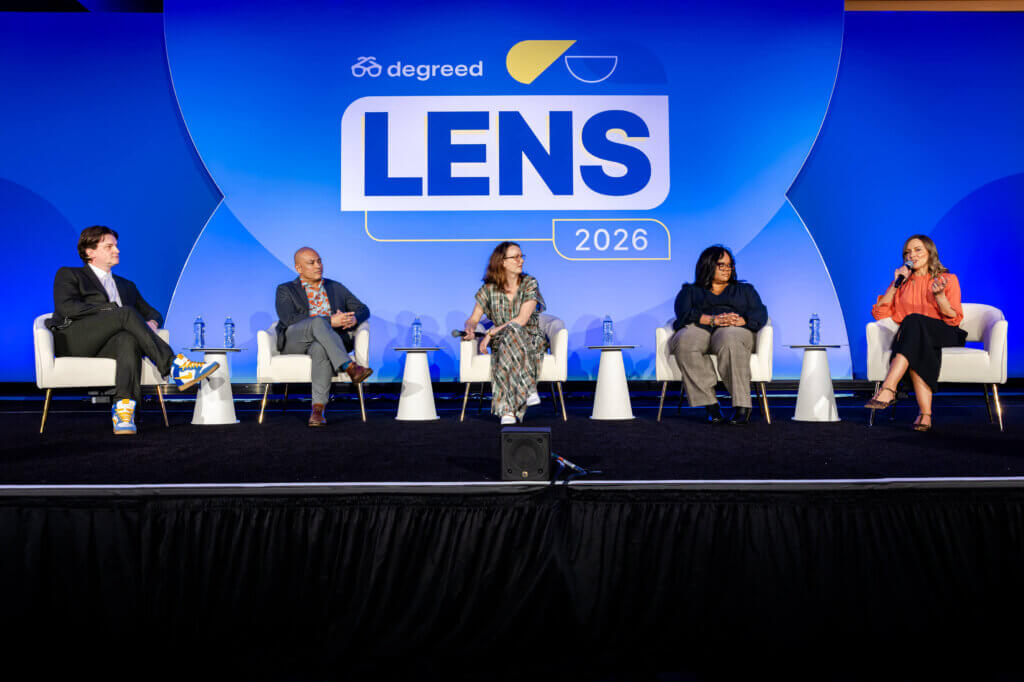
„We’re going to iterate and learn as we go,“ Zoe Botterill, Head of Learning and Development at Pearson, said.
Efficiency alone isn’t enough
When pressure increases, most organizations add more—more programs, more tools, more initiatives. In fact, McKinsey has found that employees now experience 5x more change programs than they did a decade ago. But the reality is that 59% of change initiative value is lost between the initial idea and the execution of these initiatives. This explains in part why 89% of leaders are looking for a drastic change in how their organizations develop employees. They understand that this is where the value will be created or lost when it comes to AI investments.
“When pressure goes up, most organizations respond by adding something. My challenge to you is, as a high-performing team: Pause. Think through how you can simplify. Focus on the capabilities, the skills, and the workflows,” Jennifer Sutherland, Global Head of Learning Enablement at ZS, said.
More isn’t always better. In fact, sometimes, it’s detrimental. Rashidi told LENS attendees that the endgame isn’t to be more productive, it’s to be more effective: “We’ve got to help our organizations to stop being overly obsessed with productivity and efficiency, because this just measures ‘more.’ But what if we are doing ‘more’ of the wrong things?”
Efficiency for the sake of efficiency isn’t returning the dividends many leaders think. In fact, in some areas, it’s weakening your overall strategy.
“Efficiency doesn’t create strength in your workforce,” Blake said. “Think about it. If you can automate away a job, you’ve probably already done so.”
Safe experimentation and practice are key
Another critical piece of agility is having the curiosity and courage to experiment is becoming more and more important, especially as technology continues to evolve at high speed.
„You have to be able to fail because it’s in the failure that you find the gold, the treasure, and the lessons,“ Antonia Jackson, Learning and Technology Partner at HubSpot, said.
And part of that experimentation means pressure-testing your systems and tools. If you’re trying a new technology, Carlo José, Global Head of Learning and Development from GSK, said pilots are exactly the right time to challenge the system.
„Break it now while we’re in testing stages so we can figure out how to evolve,“ José said.
Another way this principle comes into play is in learning itself. New AI tools, like Degreed Maestro, give users the ability to practice, receive feedback, and even fail at new skills like presentations, sales pitches, or business-critical conversations. And with AI, they can do so without judgment.
TEKSystems, for example, used Maestro to deliver personalized practice opportunities to their sales teams at speed and scale.. And here is some of the feedback they received:
“Their confidence grew,” Stefanie Kuehn, Senior Program Manager, Organizational Development at TEKSytems said. “They were able to role play in a safe environment, and that meant not having a leader or a mentor over your shoulder listening in. But they were able to do the Maestro experiences multiple times until they felt that they were good enough to then go ahead and approach that call or test out their ability.”
Human Readiness Drives the Future
The biggest takeaway we kept hearing over and over again? Technology alone isn’t enough for AI transformation. You can have all the AI tools in the world, but if your workforce is unprepared, you won’t see that ROI.
“It’s about people and how people use technology for the business,” Ingrid Urman, Global L&D Director at Tenaris, said.

Businesses aren’t seeing the ROI from AI because even though they got the tools, they didn’t focus on upskilling the people. If we expect people to do more work in the same amount of time during this Age of Intensification, then we have to empower them to be proficient and effective using these tools.
This is the real work of transformation: building human capability to match technological ambition.
The insights from the LENS stage are an indicator of what’s coming, but amidst all of that, it’s crucial to remember our role as humans in shaping that future.
“Find your edge,” Rashidi said. “Continue to be creative. Connect the dots where machines cannot. Be accountable for your organization. You have a moral responsibility.”
Technology will keep accelerating. Expectations will keep rising. Human transformation is what determines whether businesses keep up or fall behind.
For more information on the Degreed product announcements and updates made at LENS, please register for our six-part Degreed In Action webinar seriesor read our product announcement press release.
Unser heißer Draht zu Ihnen.
Exklusive Einblicke, Infos zu bevorstehenden Veranstaltungen, Updates zu Degreed-Lösungen – das alles erwartet Sie in unserem monatlichen Newsletter.