Your skill data lives in your LMS, HCM, and talent marketplace, but none of it speaks the same language. Skills+ normalizes, customizes, and puts that data to work, so you can build and act on a skills strategy that puts skill data into action.
Three pillars of skills management, working together.
Control and customization
Define skill names, descriptions, synonyms, and proficiency levels your way, including internal frameworks and process-specific language. When you control the definitions, every downstream experience, from Maestro Skill Reviews to Dynamic Learning Plans, gets calibrated to your standards instead of a generic scale.
Interoperability and insights
Normalization across systems means skill labels and proficiency scales speak the same language. That consistency is what makes skills benchmarking and workforce planning reliable, and gives you meaningful data for the strategic decisions that come next.
Skill-powered development
Because you define what proficiency means for each skill at your organization, development happens according to your priorities instead of a generic rubric. Content gets tagged with proficiency level according to your definitions, unlocking skill-powered development that matches where each person actually is. And because this happens automatically, your skill data gets put into action instead of just sitting in a system.
Skill data management
Skills+ handles normalization and content tagging so your team can focus on strategy
Custom skill definitions
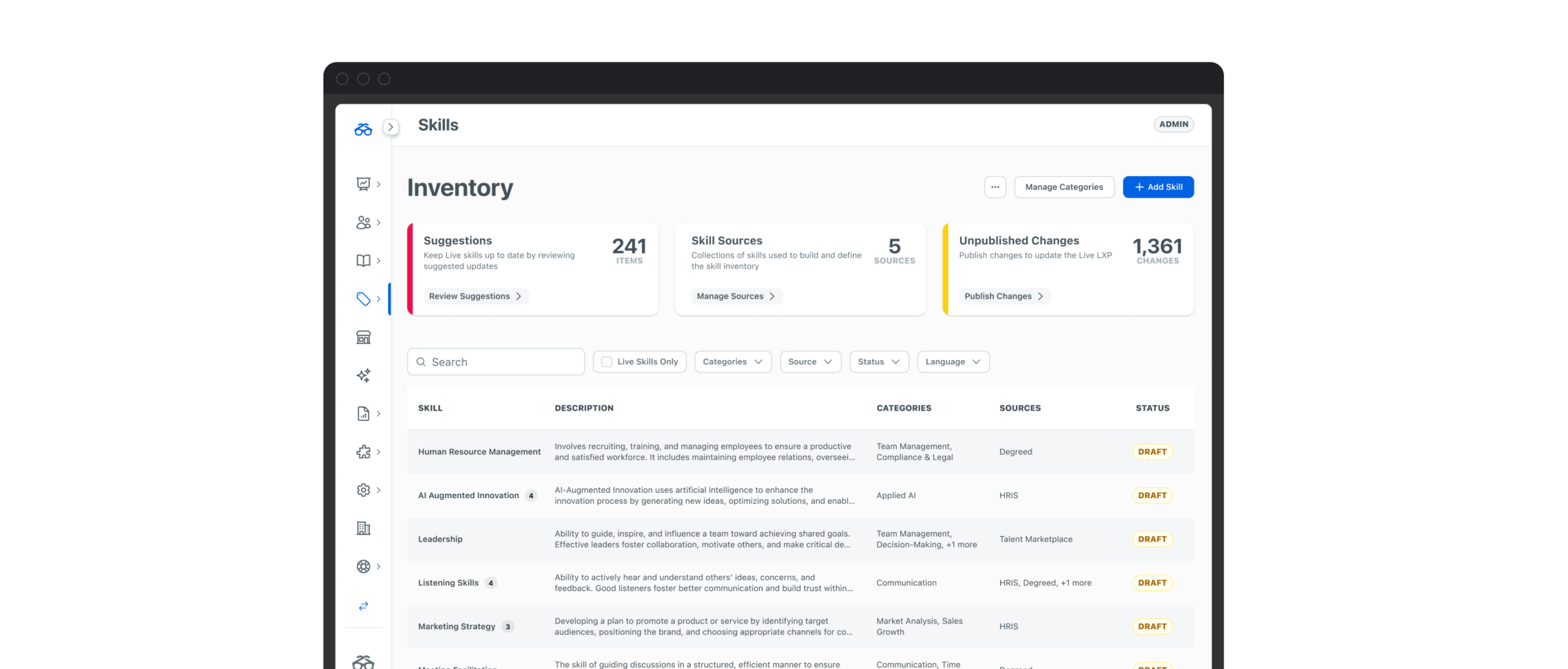
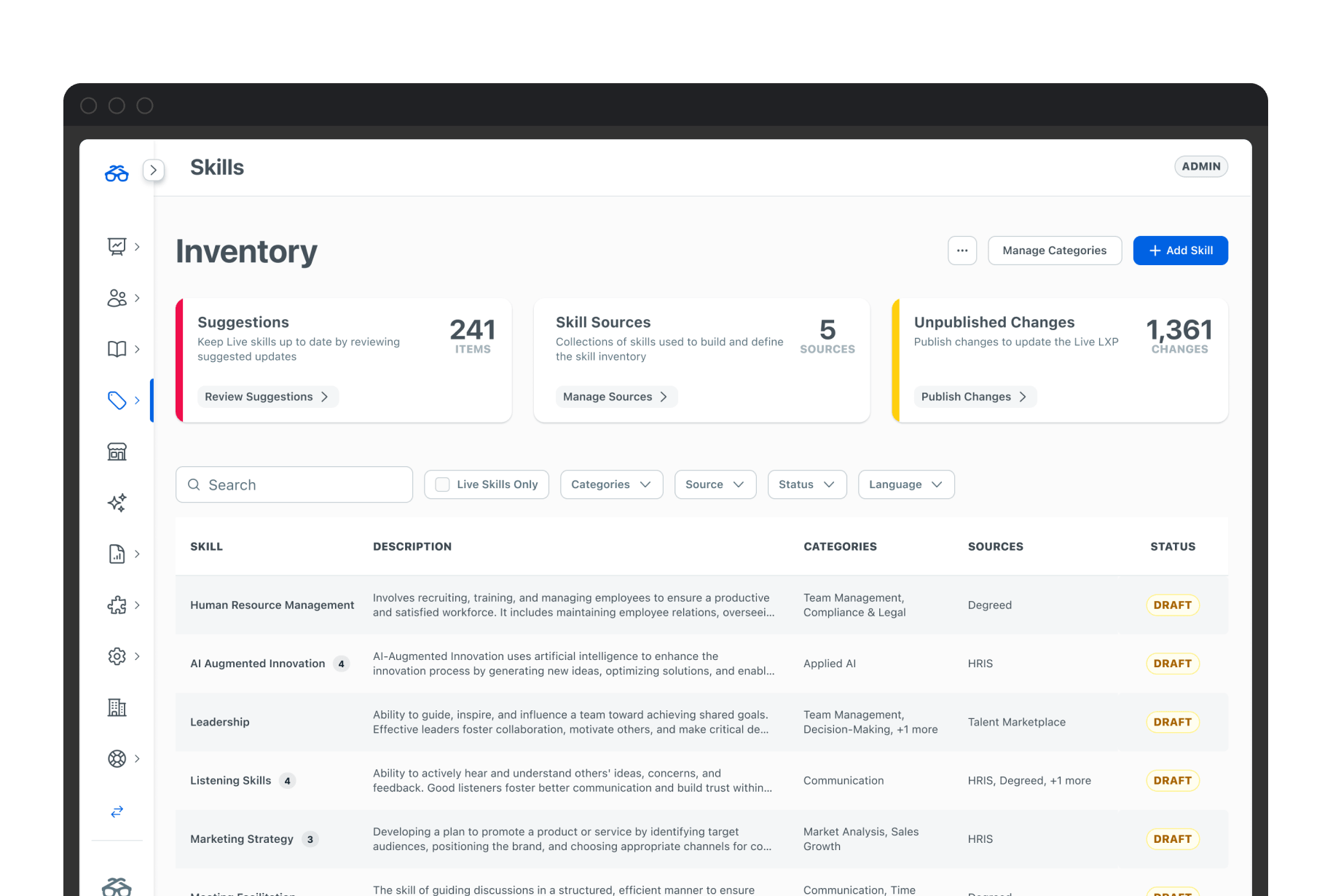
Add, edit, and customize skill names and descriptions, so definitions match your organization’s unique needs.
Proficiency descriptions you control
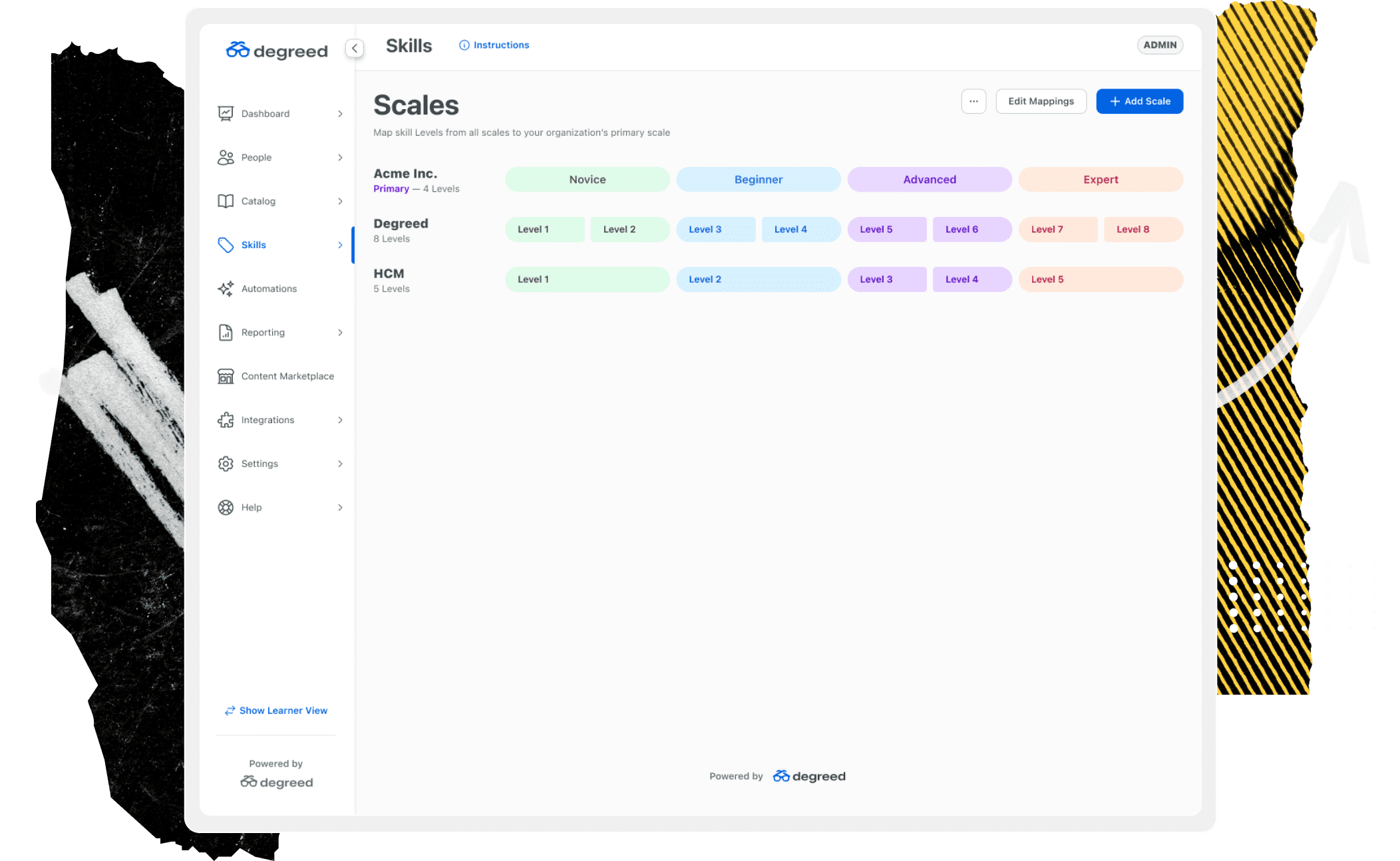
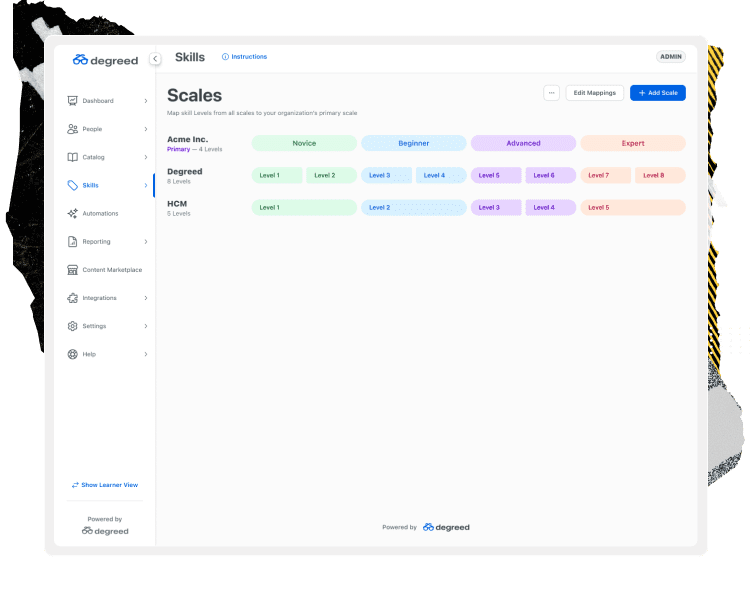
Define what each proficiency level actually means for every skill, and apply it consistently across Degreed’s entire learning ecosystem.
Synonym management
Identify and manage skill synonyms so skills like ML and Machine Learning are treated as the same skill, while related but distinct skills like AI stay separate.
Normalization across sources
Normalize skill names and proficiency scales from across your ecosystem, so a skill means the same thing no matter where the data came from and you have accurate data to inform strategy.
Human-in-the-loop controls
AI recommends skill descriptions, proficiency descriptions, and content tags, with human-in-the-loop controls so your team reviews and approves before anything goes live.
Automatic content tagging
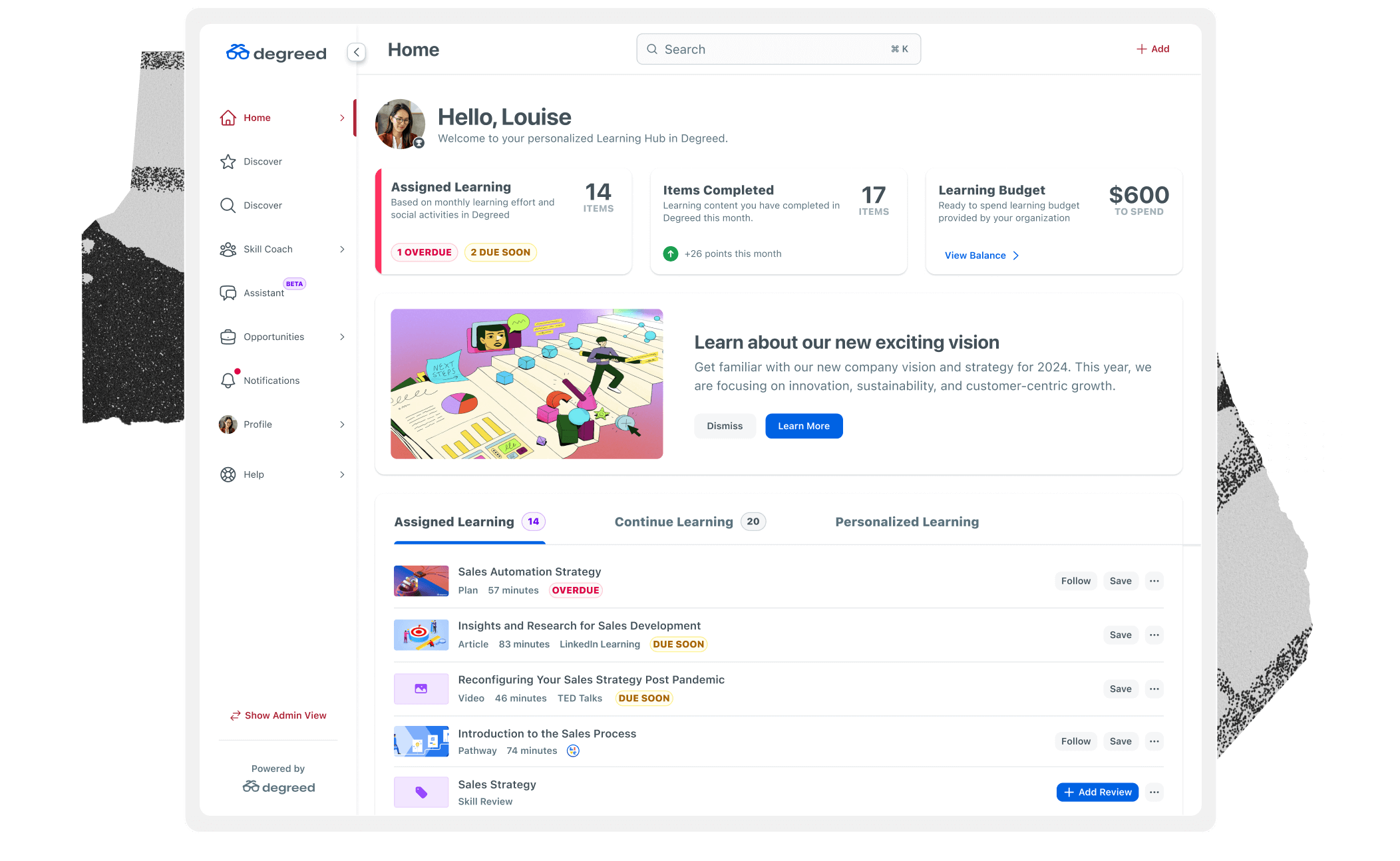
Content is automatically tagged with the correct skill and proficiency level according to your definitions, so people receive the right content to grow according to their unique proficiency.
Calibrated skill reviews
Your skill definitions are used in Maestro’s AI-powered skill reviews, so skill ratings match how your organization actually defines each level, not a generic rubric.
Powering workforce adaptability
Accurate, normalized skill data is what makes it possible to spot gaps in adaptability skills and other future-facing capabilities before they slow down a transformation.
Product Preview
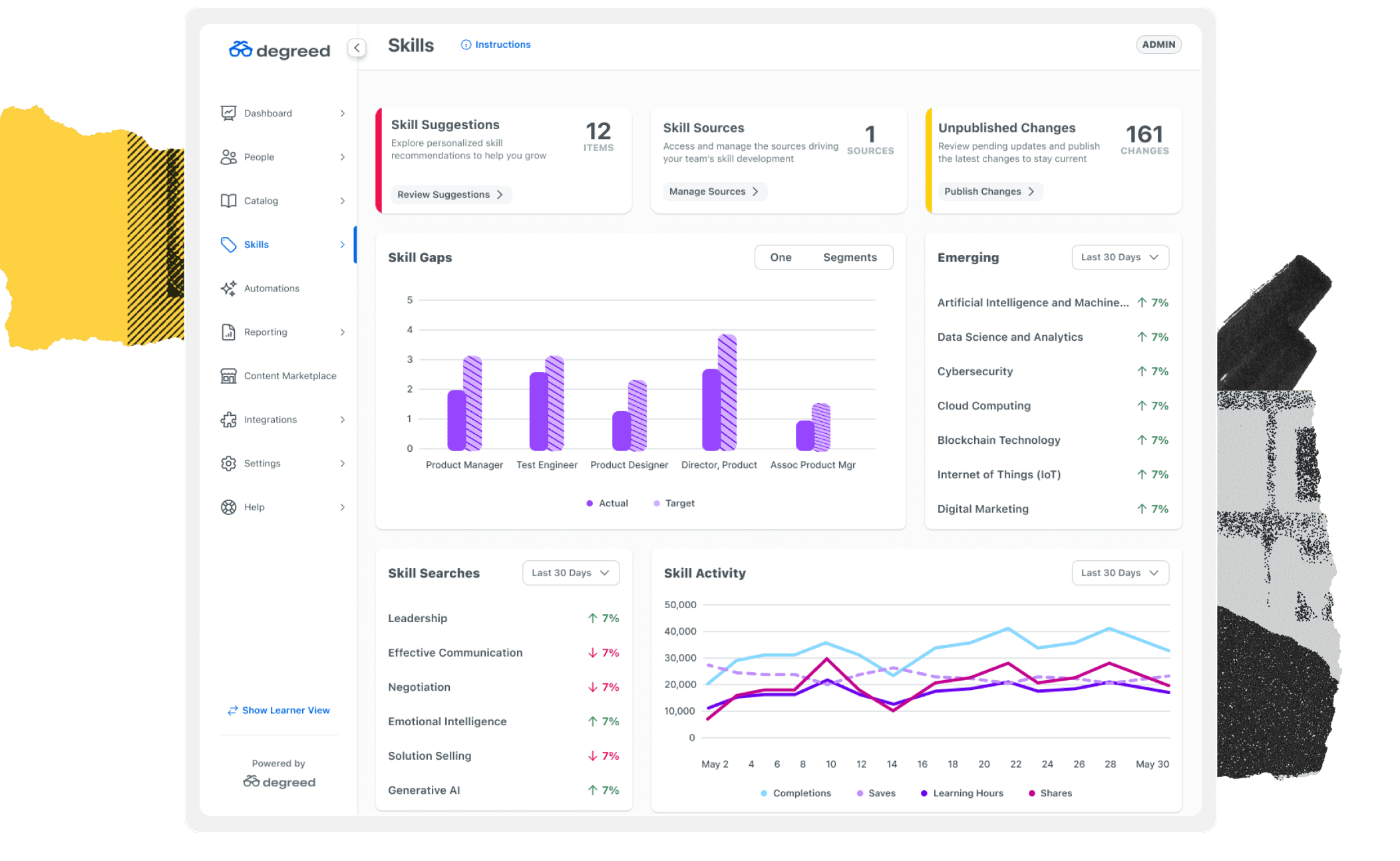
Unprecedented visibility
Skill data from across your tech stack unite to create a bigger picture in Degreed.
[Degreed’s] proactive approach not only enhances Celonauts' individual skills, but also aligns teams with evolving industry practices and emerging trends.”
In 30 minutes, see how Skills+ acts as the skills data orchestrator behind your entire learning ecosystem, normalizing, customizing, and activating skill data so your skills strategy actually works.
✓ Integrate and normalize skill data across systems in your tech stack
✓ Customize skill and proficiency descriptions to match your organization's standards
✓ See how AI auto-tags content so people get the right content for their proficiency level
✓ Learn how Skills+ powers skill-powered development at scale
✓ Use skill data to deliver a highly personalized, impactful learning experience