

This time next year, Human Resources (HR) as a job role and function could look entirely different.
This isn’t a surprise to most HR professionals experiencing the transformation in real time. 89% of surveyed HR senior leaders told CNBC they believed AI would reshape HR job roles in 2026.
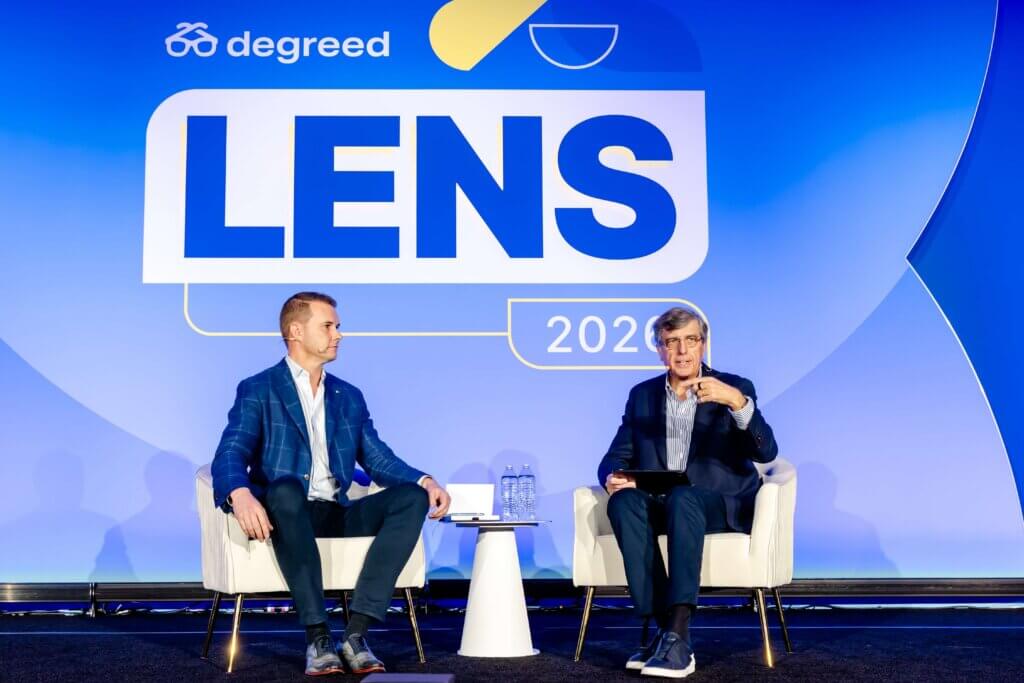
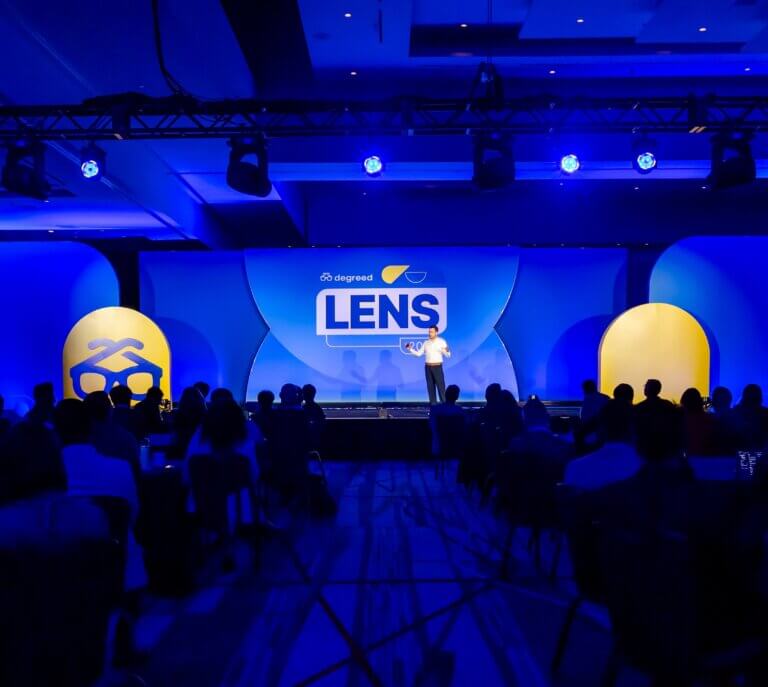
At Degreed LENS 2026, Claudio Muruzabal, Board Member, Global Business Transformation Advisor and Former Chief Business Officer, and Erik Lossbroek, CRO at Degreed, discussed “The End of HR (As We Know It).” While the session made it clear that HR continues to be essential and is not going anywhere, it also underlined the fact that the HR function is undergoing a deep overhaul as a result of emerging technology and larger-scale organizational shifts.
Automation is Redefining HR’s Role
More and more HR tasks are being automated or turned over to AI. In 2025, 66% of HR teams used generative AI and approximately 77% of HR organizations had a technology initiative in place to improve efficiency, according to The Hackett Group.
But this effort isn’t new.
“HR has been ahead of the curve in terms of bringing AI to the business,” Muruzabal said. He went on to explain that HR has often been one of the first business functions using AI—for hiring, recruitment, assessment, and more.
Now, AI tools are getting sophisticated enough to truly automate some of the repetitive tasks that bog down HR teams. Muruzabal said that this kind of automation is making many HR functions much more self-service for employees, while reducing the load for HR from that type of work.
But when that happens, the work HR teams do isn’t eliminated; it’s extended into new areas. And that work is increasing. That same study from The Hackett Group found that HR workloads were actually set to rise 10% in 2025. As more menial tasks disappear, HR professionals can focus on more strategic, large-scale business initiatives, like capability building.
“If we can envision that model, in which we use automation even more in all of the traditional functions, and we focus our resources on the future and development, we’re talking about a function that is very different from the function we’re all used to,” Muruzabal said. “And it’s up to us—the ones who we believe that we need to focus in the learning space to make that happen—to create the capabilities and the affordability to invest more in this continuum.”
That focus on learning and workforce development is what will make organizations successful long-term, because that is what will allow businesses to better adapt to change.
Moving From Development Programs to Capability-Building Systems
The new mandate to adapt is falling to HR, talent, and learning teams. To meet these growing development needs, it’s not enough to curate and launch programs semi-annually.
According to Financial Times, traditional learning programs can take three to six months to roll out. AI capabilities and tools change significantly in the time it takes to research, build, and launch initiatives like those.
“What you need is to be focused on developing talent every day,” Muruzabal advised.

In another LENS 2026 event session, Zoe Botterill, Head of Learning and Development at Pearson, shared the need for learning and development teams to move to more of a product mindset. Through that lens, the team would develop programs in shorter sprints, continually iterating and building on learning experiences while they are operating in the organization.
But this is a huge shift away from traditional training models. Creating a learning solution that’s iterative and responsive means moving from program-based talent development to a comprehensive system that continuously adapts to develop workforce capability. Such a system will connect skills to business priorities in real time and evolve as roles change. It will grow with the business.
This is where HR can step in and activate their experience in setting up org-wide, people-centric systems to support strategic initiatives for the business. But transformations of this scale don’t come without barriers or cross-functional impact.
AI Raises the Stakes for HR
The rise of AI tools, trends, and capabilities will inevitably create winners and losers—companies that will thrive in the new world and those that won’t be able to keep up. Regardless, the work of HR teams is not going away. If anything, work is more intense and demanding than ever, though it will affect business functions differently.
“There will be some segments and markets that will be more impacted than others, but in the longer run, there is a much bigger opportunity to really create a bigger pie for everybody,” Muruzabal said. “I’m not afraid of AI.”
As part of this transition, there has to be a growing focus on technological organization, access, and structure, which will bring in IT, legal, and compliance into the mix.
“Governance is as important as technology itself,” Muruzabal said. “Making the right governance decisions in terms of technology will become even more important in the future.”
The weight of governance will likely also become an increasingly important element of HR responsibilities. This is especially true as talent development technology becomes more integrated and personalized, and the sensitive human data those systems contain is shared across your ecosystem to leverage emerging AI capabilities like Model Context Protocol (MCP).
According to a 2026 survey of CHROs, the top cited barriers to AI adoption are organizational concerns, such as employees’ fear of job loss, budgetary pressures, and security and compliance needs. Not the technology itself.
HR Transformation In 2026
HR is feeling the pressure to ensure the workforce keeps up with an ever-evolving workplace while also adapting and evolving their own HR models and systems with new technology.
Through this transition, we’re seeing:
- A shift in the focus of HR from small-scale, day-to-day tasks to more strategic, business-critical initiatives, thanks to automation and AI.
- A move from one-time training programs to more holistic, responsive systems for always-on capability building.
- A rise in the importance of human work and tech governance, even as more tasks get outsourced to AI.
This unique convergence with technology will be HR’s new operating model for 2026.
For more great insights, sign up for our six-part Degreed In Action webinar series.

Let’s keep in touch.
Sign me up for the monthly newsletter with exclusive insights, upcoming events, and updates on Degreed solutions.